TPL_YOOTHEME_SKIP_TO_MAIN_CONTENT

Asia Pacific

Computex Taipei gathers Asia's leading ICT companies

THE ANNUAL international ICT trade show, Computex Taipei, will unfold on June 2-6, attracting Asia's leaders in information and communication technologies (ICT)

This year, 1702 overseas and domestic vendors will be spread out across Taipei's TWTC Exhibition Halls 1 and 3, the Nangang Exhibition Hall, and TICC. 
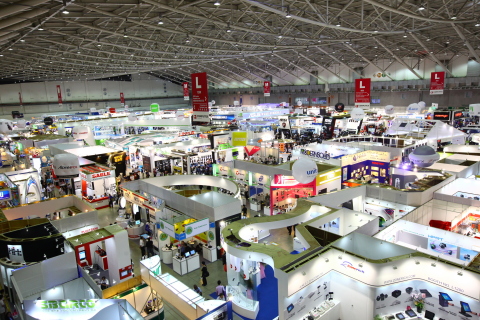
This year’s vendors feature an impressive array of industry titans, which include Acer, Asus, BenQ, Broadcom, Delta, Gigabyte, Hisense, Intel, MediaTek, Microsoft, MiTAC, MSI, NVIDIA, SanDisk, Supermicro, TP-Link, and Transcend, as well as first-time exhibitors ARM, ASE Group, NTT, (Fujitsu subsidiary ) SOCIONEXT, Cypress Semiconductor, Haier, and Canon Korea.

Overseas exhibitors account for about 30 percent of all exhibitors and hail predominantly from China, the United States, Hong Kong, Japan, Korea, and the Netherlands.

Following the explosions of wearables onto the tech scene in 2014, this year’s Computex is presenting a Wearable Technology section. With the rising trend of large screen smartphones, portability and ease of operation have also emerged as important issues and an area for developing wearables.

As mobile devices evolve from handheld to greater portability, wearability will continue to be an area of focus for the ICT industry. The Wearable Technology area comprises 34 individual exhibitors that include Gajah Technology, Brinno Inc, Chipsip, and GlobalSat, featuring products like smart glasses, watches, and apparel and electronic paper.

Another new area at Computex is 3D Business and Applications, with major exhibitors XYZPrinting, FLUX 3D Printing, Cinaflex International, Etron Technology, and SKY-TECH Taiwan unveiling their latest 3D printers, printing supplies, and peripherals. International technology research firm Gartner projects 3D printing as one of 2015’s top 10 strategic technologies—with visible industrial, architectural, medical, and consumer applications—and that the global 3D printing shipments for the year will increase by 98 percent and double in 2016.

European top three semiconductor manufacturer and the global market leader in NFC chips, NXP will also be setting up New X Possibilities, where visitors can experience NFC applications and interact with secure network devices centering around Simple Transportation, Secure Payment, and Smart Lifestyle.

The Computex d&i awards, a collaboration between TAITRA and the German iF International Forum Design GmbH since 2008, now enters its eighth year. This year features 271 entries from 118 companies from all over the world, including many startups with fresh innovations. The number of entrants is evidence of the d&i awards’ standing in the ICT industry.

The international panel from iF chose 72 winning designs, which include smart phones from HTC and ASUS and designs from first-time entrant Dell and returning participant, Philips. The winning designs will be on display at the Computex d&i awards booth, where visitors can experience these products firsthand.

This year’s Computex Taipei promises a lot of the new, whether it’s new trends, new designs, or new companies — earning Computex Taipei a high reputation as a venue for developing ICT business.

TAITRA successfully held an innovation forum in 2014 to promote Taiwanese startups, supported by Taiwan’s Bureau of Foreign Trade under the Ministry of Economic Affairs, and this year, has dedicated Exhibition Hall 3 to the efforts of Taiwanese startups in Smart Life, the Internet of Things, Wearable Technology, and Intelligent Vehicle Systems. Exhibitors in this hall include GAIUS, Bomdic, Aidmics Biotechnology, Zillians, HERE, Maktar, Ufro, Linknext, and Adenovo.

www.computextaipei.com.tw

ends

Australia’s New Colombo Plan mobility grants

MORE than 3,000 students from 37 universities will live, study and work in the Indo-Pacific region during the second year of the Australian Government’s New Colombo Plan.

Foreign Minister Julie Bishop and Education Minister Christopher Pyne recently announced around 3,150 undergraduate students would be supported by the New Colombo Plan mobility round for 2015. 

“New Colombo Plan mobility grants will support these students to study in 32 locations across the Indo-Pacific from India in the west, to Mongolia in the north and the Cook Islands in the east,” Ms Bishop said.

“The expansion of the New Colombo Plan in 2015 reflects the strong support of partner governments for the plan’s aims of lifting knowledge of the region in Australia and for the Plan to become a ‘rite of passage’ for Australian undergraduate students.

“The continued strong interest of students in gaining first-hand experience of business in the region will ensure they are well placed to make a valuable contribution to the regional engagement of our business community and to driving economic growth in Australia and our region in the years ahead.”

Mr Pyne said New Colombo Plan mobility grants are awarded to Australian universities to support their students to undertake semester or short-term study in the region.

“These grants will support students to study at a university overseas for anywhere from a few weeks to a full semester,” Mr Pyne said.

“The grants cover study, practicums, clinical placements, internships and mentorships, and short-term research across a broad array of disciplines.

“The flexibility of this approach ensures that the program can support a wide range of students to experience the benefits of studying and living in the region.

The government has committed $100 million in new funding over five years to implement the New Colombo Plan. The New Colombo Plan pilot year of 2014 supported 40 scholars and more than 1300 mobility students to live, study and undertake a work placement in the four pilot locations of Hong Kong, Indonesia, Japan and Singapore.

The program recalls the 1949-1957 Colombo Plan which transformed Australia’s relations with Asia, sponsoring thousands of Asian students to study or train in Australian tertiary institutions

www.dfat.gov.au/new-colombo-plan


ends

Australia helps to improve economic opportunities for women in South East Asia

AUSTRALIA has formed a new partnership with the World Bank to enhance women’s economic empowerment in South East Asia over the next four years.

The announcement by Foreign Minister Julie Bishop of the $15 million investment coincided with International Women’s Day in early March and the 20th Anniversary of the Beijing Declaration and Platform for Action for gender equality. 

“Increasing women’s participation is one of the most powerful ways to improve economic and development outcomes,” Ms Bishop said. “Goldman Sachs estimates that closing the employment gender gap in countries in our region, including Vietnam and the Philippines, could push per-capita incomes 14 percent higher than current projections by 2020 and 20 percent higher by 2030.

“Through this partnership we will work with the World Bank and private sector to support women entrepreneurs to access financial services and build their business skills.”

Ms Bishop said a key element of the strategy was to work with large companies to improve employment opportunities for women, improve their workplace policies, and increase the use of services provided by women entrepreneurs in their supply chains. 

“The partnership will focus on improving knowledge of how to increase women’s economic opportunities and applying those lessons to the design of programs and policies,” she said.

“This will be done through creation of a South East Asia Gender Lab to undertake data collection, analysis and impact evaluations.

“Australia’s investment in women’s empowerment through practical programs such as this partnership with the World Bank supports our international commitments, including at the United Nations Commission on the Status of Women(CSW59).

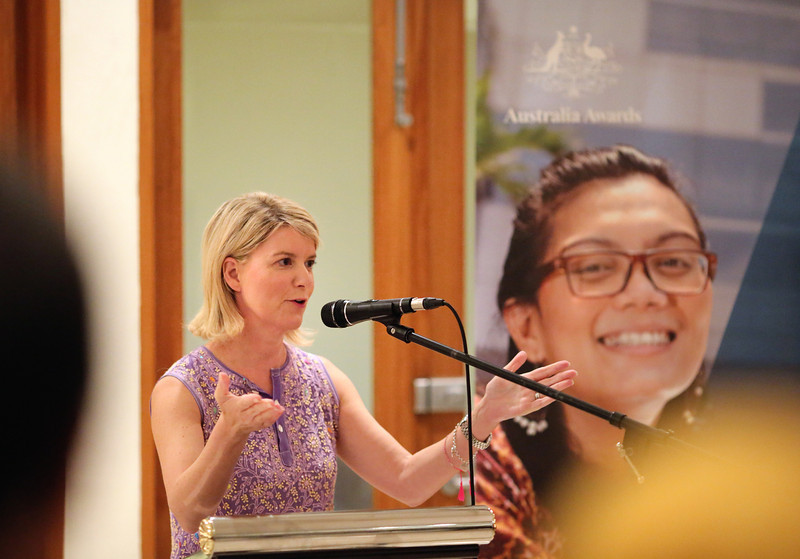
Australia’s Ambassador for Women and Girls, Natasha Stott Despoja accompanied the Minister Assisting the Prime Minister for Women, Michaelia Cash to CSW59 in New York in early March to advocate for renewed international commitment and momentum toward gender equality.

www.dfat.gov.au

ends

Moreton Hire opens first international hub in Singapore

MORETON Hire, one of Australia’s largest business events providers, has announced the opening of a branch in Singapore branch, targeting expansion into the Asia Pacific region.

Moreton Hire director Peter Morahan said with the ever expanding international meetings and business events industry, the Singapore branch would become Moreton Hire’s Asian hub for customers. 

Mr Morahan said the decision to expand into Singapore reflected the firm’s long-term growth plan and strategic objective to offer an international contact for Moreton Hire customers.

“Singapore is a key MICE (meetings, incentives conventions and exhibitions) hub in Asia Pacific and we are excited to offer this unique opportunity for our customers to support their portfolio across the region,” Mr Morahan said.

He said the branch would act as a gateway for Moreton Hire’s international meetings and corporate customers coming into the Asia Pacific region and requiring local knowledge and experience.

“Customers looking to gain exposure in the fast growing market of the Asia Pacific, can now rely on having one team to deliver for them across the region,” Mr Morahan said.

Moreton Hire’s Singapore branch is the company’s sixth office after Sydney, Brisbane, Melbourne, Gold Coast and Cairns.

Moreton Hire has been servicing the events industry for more than 45 years, starting with marquee and furniture hire in Brisbane and has developed into one of the country’s most innovative business event specialists.

www.moreton.net.au


ends

Aust. nuclear science helps Asia region farming sustainability

AUSTRALIAN Nuclear Science and Technology Organisation (ANSTO) scientists are researching the environmental effects of agriculture in the Asia Pacific region, as a way of helping to maximise sustainability.

ANSTO’s Professor Henk Heijnis has assembled a team to lead the Regional Cooperative Agreement (RCA) project on land degradation,  a multinational research effort that could lead to improvements in the way scarce environmental resources, like soil and water, are managed. 

Prof. Heijnis said the Asia Pacific region was enduring “severe pressure on limited soil and water resources” due to a rapidly expanding population and economic development. Recent decades have seen rapid deforestation and clearing of lands for agricultural cultivation. 

In soil and land use studies, isotopic techniques play a crucial role in studying natural and anthropogenic soil erosion processes, Prof. Heijnis said.

“These studies will result in outcomes at a number of levels, from providing individual farmers with insights on more effective and efficient livestock, to improved crop, soil and agricultural water management, as well as giving political decision-makers the background to enable informed decisions to be made at national and regional levels,” he said.

Prof. Heijnis said ANSTO was strongly committed to nuclear technical cooperation in the Asia-Pacific through its membership and active participation in the RCA.

The RCA is an intergovernmental agreement of 20 IAEA member states in the East Asia and Pacific region. ANSTO supports the program through essential in-kind support such as the provision of experts at training courses and at meetings; hosting workshops and technical meetings; and hosting IAEA fellows and scientific visitors.

Australia’s participation in RCA is widely seen as prolific, with experts across all four thematic areas – health, environment, agriculture and industry – involved in 18 of the 22 active projects.

ANSTO scientists such as Prof. Heijnis lend their expertise in technical cooperation projects on water resource sustainability, air particulate pollution, and measuring the impact on the marine environment from nuclear power in the region. 

With the expertise of Heijnis and his team in IER in collaboration with Dr Tim Ralph of Macquarie University, ANSTO is well placed to lead the land degradation project, with extensive experience and expertise in the use of radioisotopes in soil erosion and accumulation studies.

The next review meeting of the project takes place in Kathmandu, Nepal, with Prof. Heijnis officiating for the first time as project leader. 

www.ansto.gov.au

ends


Seminar on future of Japan-Australia-Queensland business relations

THE Queensland Japan Chamber of Commerce and Industry (QJCCI) and Japan Chamber of Commerce and Industry Brisbane (JCCIB) will jointly host a seminar on August 20 at Queensland Parliament House on the future of the Japan-Australia and Japan-Queensland business relationship.

The seminar aims to accelerate business between the countries in response to Australian Prime Minister Tony Abbot and Japanese Prime Minister Shinzo Abe’s recent signing of the Japan Australia Economic Partnership Agreement (JAEPA). 

The JAEPA agreement has been hailed as introducing a new era in the bilateral relationship between Australia and Japan that is expected to stimulate two-way trade between both countries – and QJCCI and JCCIB are working with of Trade and Investment Queensland, the Embassy of Japan in Canberra and the Consulate-General of Japan in Brisbane to help drive the opportunities forward for business.

Japan is Queensland’s second largest trading partner after China and the new agreement offers significant potential to expand the commercial links between the state and Japan.

The JAEPA seminar will feature keynote speakers, a panel discussion and networking.

Responses are due on August 11 for a limited number of seminar places through the booking form here.

www.qjcci.asn.au

www.jcci.org.au

ends

Will ABC International and Australia Network still expand China media cooperation?

IN THE WAKE of the Federal Budget, it is unclear what will become of the planned link-up between ABC International and its Australia Network with China’s media powerhouse, the Shanghai Media Group.

The proposed arrangement was reportedly supported by media authorities of the Chinese Government in Shanghai. Yet the cuts to the ABC, SBS and the reported withdrawal of funding for the Australia Network will negatively impact the proposed arrangements.

On the back of the recent Australian Government-backed Australia Week in China trade mission, ABC International and the Australia Network struck an international multi-platform media cooperation arrangement supported by the Shanghai Municipal Administration of Culture, Radio, Film and TV.

The detailed agreement to formalize the arrangement were to be signed in Shanghai on May 4. Through the cooperation, ABC International was set to establish an online portal in China through which a range of ABC and other Australian media content and services could be offered and presented to partner Chinese media organisations. 

The arrangement also enabled the ABC to establish a base in Shanghai with official approval to represent and sell media content across China, enter into international co-productions, and generate international sponsorship and promotional opportunities.

“This historic agreement opens up a whole new world of television and online cooperation between Australia and China,” ABC managing director Mark Scott said. “It provides a truly unique window for all Australian media to build a friendly and mutually cooperative relationship with China.”

It is ironic that so much of the media cooperation had been driven by the Australian Government, with the ABC extensively covering Prime Minister Abbott’s visit and early steps for a free trade agreement – yet the Federal Budget now appears to place the deal in jeopardy.

“International Channel Shanghai last week broadcast a week of Australian TV programs provided by the ABC and Australia Network to coincide with Prime Minister Tony Abbott’s visit,” Mr Scott said when announcing the cooperation deal. It was also a time when Australia’s profile was high in China from leading the search for missing Malaysia Airlines flight 370.

“Q&A’s live broadcast in China was the first open interactive public comment style program broadcast live from China to Australia,” he said. “The success of last week and the future under this agreement will help build understanding between China and Australia.”

Shanghai Media Group’s International Channel Shanghai executive director, Sun Wei said, “The Shanghai Media Group is China’s second largest media organization and its recent restructure ensures we are looking to further build our international media partnerships.

“Ground breaking international broadcasts such as Q&A, which was produced as a collaboration between Australian and Chinese television crews, pave the way for bigger and better international media cooperation and cultural connections in the future.”

ABC International CEO Lynley Marshall commented at the time: “This agreement will enable us to put the full range of Australia Network programming and content from other Australian media into China and for China to connect more closely with our media.

“Most importantly, the agreement will provide opportunities for promotion of Australian business, tourism, entertainment, culture and education.”

The eventual shape of any cooperation will play out in the next few months as the ABC is expected to re-organise its budgets in the wake of the funding cuts.

www.abc.net.au

ends

POSTED MAY 16, 2014.