TPL_YOOTHEME_SKIP_TO_MAIN_CONTENT

Asia Pacific

Discovering Petchaburi through its food economy
By Ellen Boonstra, Business Acumen magazine's Asia correspondent >>

MOST ITINERARIES in Thailand still follow a well-trodden route, with Bangkok, the southern islands and Chiang Mai in the north continuing to dominate travel plans, often feeling a little overrun in the process.

But just two to three hours from the capital, things feel markedly different. The pace slows, the crowds thin out, and you find a more laidback side of Thailand, still off the beaten track, where local life takes centre stage and the experience is more grounded and authentic.

Located on the western shore of the Gulf of Thailand, around 123 kilometres southwest of Bangkok, Petchaburi benefits from diverse ecosystems and strong agricultural resources that shape its culinary identity. 
Often described as the ‘City of Three Flavours’, it draws on the sweetness of palm sugar, the saltiness of coastal salt and the sourness of local limes. These elements don’t just define its food, they run through markets, kitchens and small-scale producers, giving the local cuisine a clear sense of place. 

It’s no surprise, then, that Petchaburi was designated a UNESCO Creative City of Gastronomy in 2021, joining Phuket and later Songkhla as part of the network. The recognition reflects a long-established food culture built on local ingredients and small-scale production.

Earlier this year, Thailand’s Government Public Relations Department invited a group of international media to Petchaburi for a two-day field trip aimed at showcasing its potential for gastronomic tourism, with a focus on the province’s wider food economy.

The itinerary focused on the production side, from agriculture to small-scale manufacturing. Across a series of site visits, from coastal aquaculture to family-run food businesses, the trip traced a model of tourism where visitors engage directly with local industries rather than simply consuming finished products.

From coastline to confectionery

The first stop was a marine farm in Ban Laem District, developed under a royal initiative. The site operates as both a functioning aquaculture facility and a learning centre, demonstrating how coastal communities are moving towards more sustainable, higher-value production.  
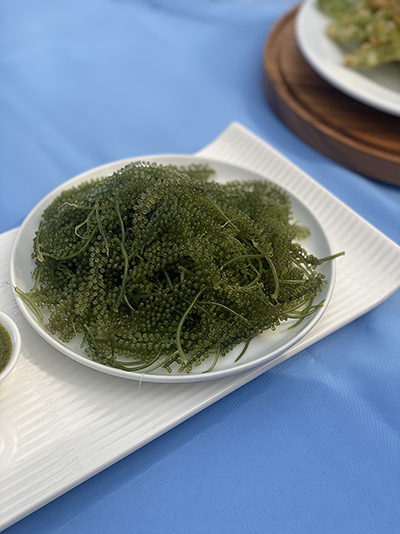
Shrimp, shellfish and fish such as sea bass and grouper are cultivated alongside seaweed, including sea grapes, a niche product with growing culinary appeal.

Often referred to as green caviar, sea grapes are tiny, bead-like seaweed with a delicate, pearl-like appearance and a gentle popping texture. The model focuses on resource efficiency, reducing pressure on wild stocks while creating alternative income streams for local communities.

From there, the group moved inland to Uncle Anek’s Dessert Factory, a third-generation producer where traditional Thai sweets are being adapted for broader markets. Petchaburi has long been associated with desserts, many of which rely on egg yolks and palm sugar, giving them their distinctive richness and colour.

Here, recipes are being recalibrated with reduced sugar levels to better suit international tastes, alongside updated formats and packaging, often featuring local landmarks, designed with export in mind.

It reflects a broader shift towards value-added products that can travel beyond the local market.

Balancing tradition and adaptation

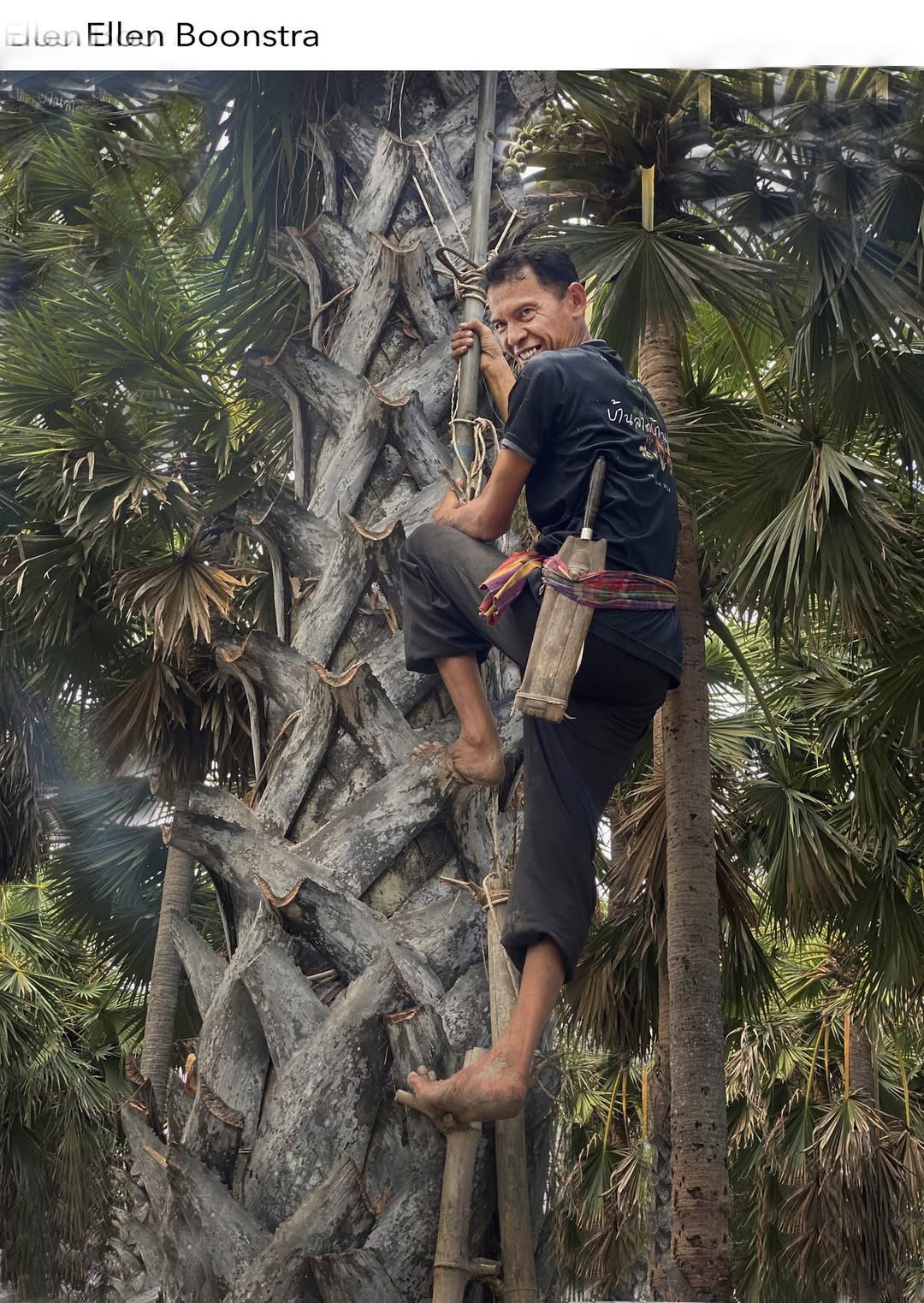
A visit to a palm sugar plantation in Ban Lat District offered a more traditional view. Production remains largely manual, from tapping toddy palm trees to boiling sap into sugar.

Once a staple of Thai cuisine, palm sugar is increasingly replaced by refined alternatives, placing these methods under pressure even as they become part of the tourism experience.

A worker well into his 60s climbed a palm tree to demonstrate the process first-hand, a reminder of the skill and labour involved. 
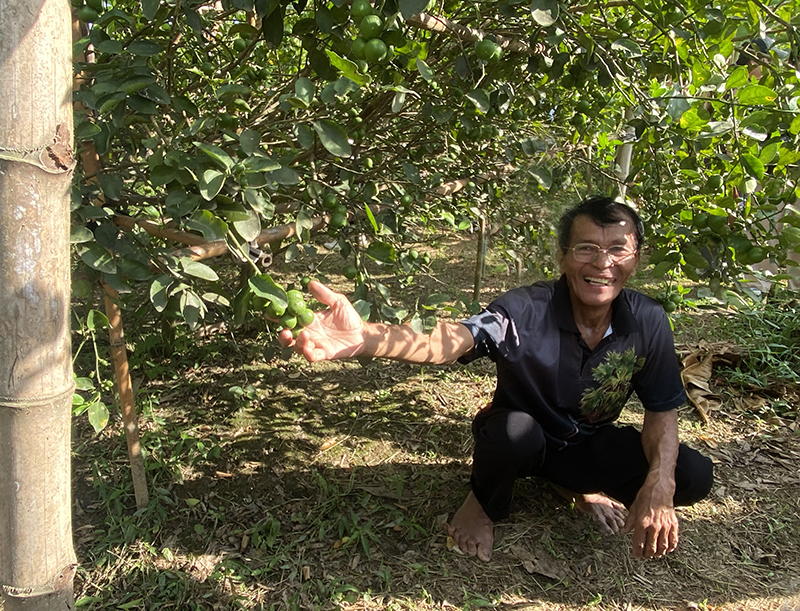
A nearby lime farm offered a more contemporary perspective. Operating under principles aligned with Thailand’s Sufficiency Economy philosophy, the farm has shifted from monoculture to a more diversified system, integrating multiple crops while minimising chemical use.

Limes remain a core product, but are increasingly processed into higher-value goods, including beverages and essential oils.

The approach reduces waste, spreads risk and creates additional income streams, showing how smaller producers are adapting to changing environmental and market conditions.

Petchaburi may not yet feature prominently on Thailand’s main tourist circuit, but its strength rests precisely in that.

By connecting visitors more closely to how food is grown, produced and adapted, Petchaburi offers a quieter, more grounded way to experience the country, one rooted in tradition but open to change.

www.tourismthailand.org/Destinations/Provinces/Phuket/228


Writer Ellen Boonstra is Business Acumen magazine’s roaming Asia correspondent.

Petchaburi (also sometimes spelled Phetchaburi) is part of UNESCO’s Creative Cities Network. www.unesco.org/creative-cities/phetchaburi


ends
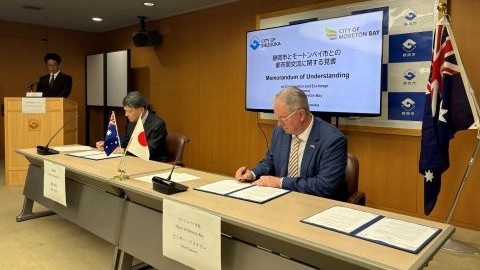
Moreton Bay builds closer links with Japan

THE CITY of Moreton Bay, Queensland, recently strengthened its ties with Japan, ahead of the 2032 Olympic Games, as Mayor Peter Flannery signed a new trade-focused agreement with one of the economic giant’s leading business cities.

Mayor Flannery put pen to paper in early May when he met with Mayor Takashi Namba of Shizuoka City, the capital of a prefecture that is a major economic hub in Japan.

Shizuoka City announced its company leaders were keen to develop trade relationships with individual businesses in the Moreton Bay region, with its economic credentials of generating more than $830 million in economic output over the past year and being home to more than 33,000 businesses.

Mayor Namba led a delegation of 39 Shizuoka business and government leaders to Moreton Bay in August 2025, progressing a range of initiatives around aquaculture, retail, food and beverage, sport, research and education collaboration, especially partnerships with the University of the Sunshine Coast. City of Moreton Bay Mayor Peter Flannery right and Mayor Takashi Namba of Shizuoka City sign the memorandum

The Shizuoka City memorandum of understanding with Moreton Bay aims to facilitate opportunities in trade, investment, tourism, education and research, and sport, including those around the 2027 Womens Softball World Cup ‘to be staged at Redcliffe and the 2032 Olympic and Paralympic Games centred on the adjacent Queensland capital of Brisbane.

“This agreement is an incredible opportunity for City of Moreton Bay to deepen our relationship with Japan, which is Queensland’s second largest export market,” Mayor Flannery said.

“It will benefit businesses in Moreton Bay with council facilitating trade relationships between them and Shizuoka City, providing a new avenue for locals to sell their products and services.”

Mayor Flannery led a week-long delegation to Japan after being personally invited and sponsored by the Governor of Tokyo to present at the Global City Network for Sustainability (GNETS) conference.

The delegation announced it had successfully built upon Moreton Bay Council’s relationship with Japan, which dates back nearly 35 years when its sister city relationship with Sanyo-Onoda was established.

www.japan.travel/en/destinations/tokai/shizuoka/

www.moretonbay.qld.gov.au

ends

Dutch Embassy sale signals new phase for prime Bangkok real estate

By Ellen Boonstra, Business Acumen Asia correspondent >>

THE NETHERLANDS has announced plans to sell its embassy compound in Bangkok and relocate to offices at Dusit Central Park, with the move expected as early as August.

Framed around efficiency and modernization, the decision has sparked strong opposition from the Dutch community and heritage advocates.

Beyond the immediate reaction, the sale reflects a broader shift in Bangkok, where historic embassy estates and their expansive green grounds are increasingly being repositioned as high-value commercial assets. 

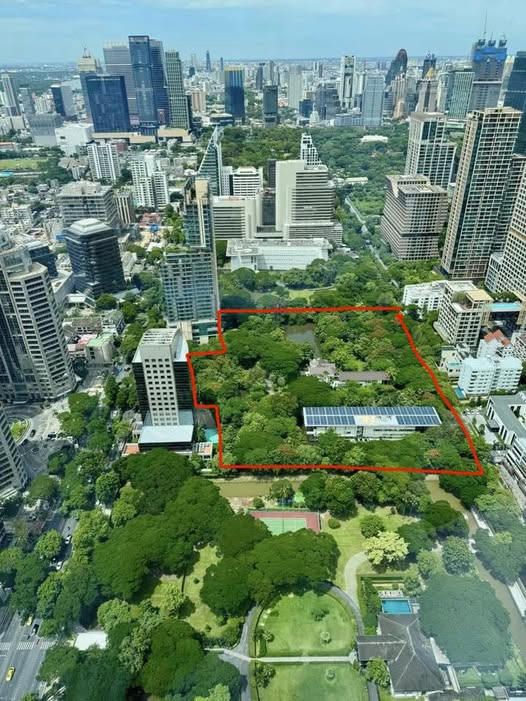
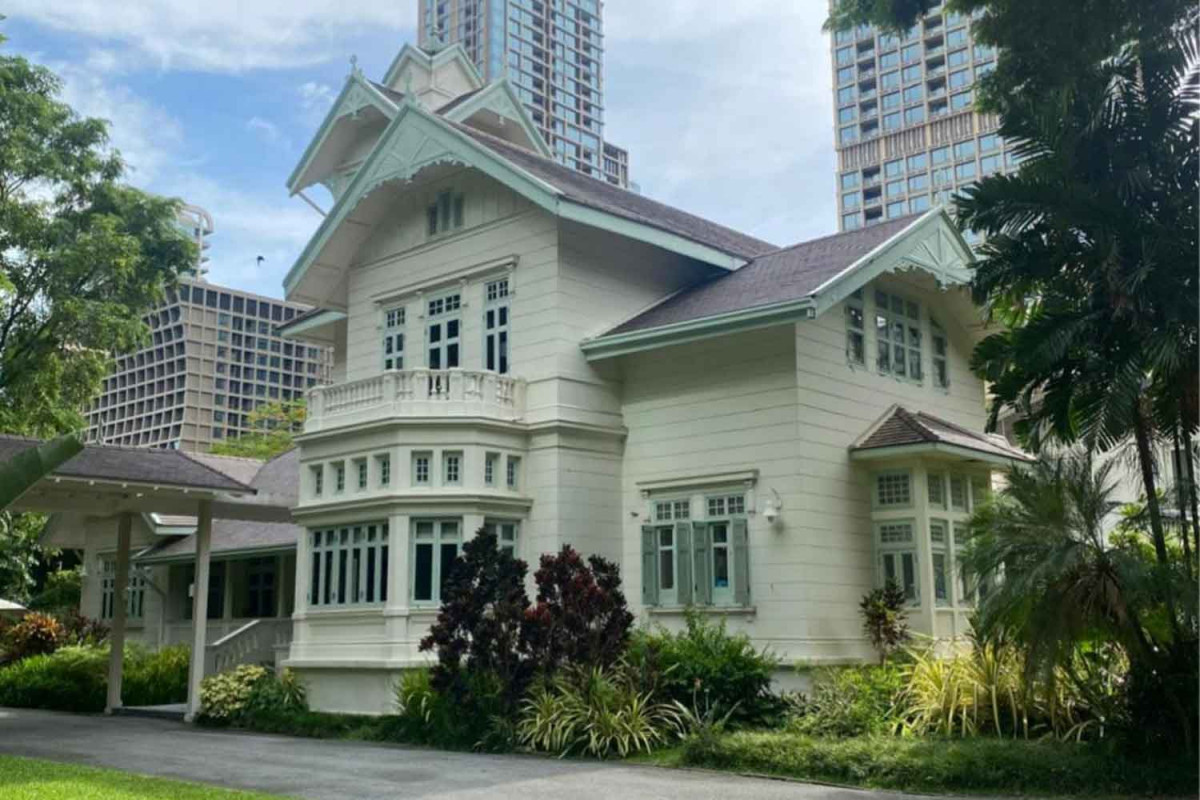
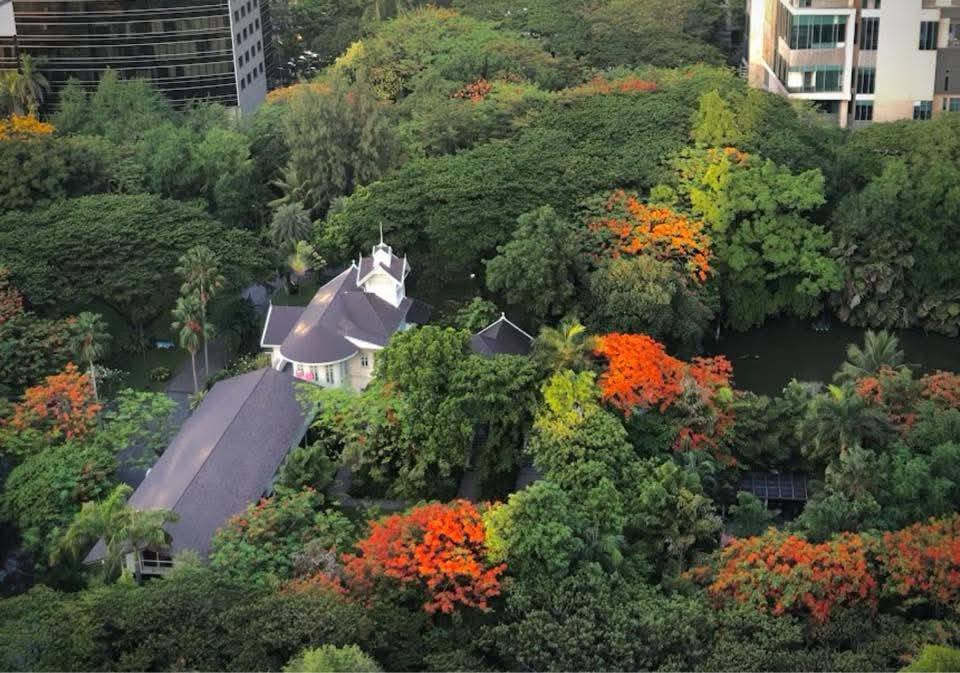
The Dutch Embassy site is widely regarded as one of the most significant heritage properties on Wireless Road, known for its early 20th-century villa and unusually lush setting. At its centre is a residence dating to around 1915, built during the reign of King Vajiravudh.

The property passed through several notable owners before being acquired by the Dutch government in 1948 as its first permanent embassy in Thailand. Since then, it has served as a diplomatic hub, distinguished by its architectural character and rare green space within an otherwise dense urban district, adjacent to the US Embassy compound.

Prime location

From a real estate perspective, the site is exceptional. Spanning about 20 rai, or 3.2 hectares (32,000 square metres), it is one of the largest remaining freehold parcels in Bangkok’s most tightly held prime corridor. Land values in this area are projected to reach up to 3.5 million baht per square wah, or roughly 875,000 baht per square metre, approaching record levels. On this basis, the site could be worth around 30 billion baht, or about A$1.2-1.4 billion.

If redeveloped, particularly as a landmark ultra-luxury mixed-use project, total development value could exceed 100 billion baht, or roughly A$4.2 billion. With comparable transactions already nearing peak pricing levels, the Wireless–Lang Suan–Ploenchit corridor continues to define Bangkok’s most competitive CBD market, attracting both leading domestic developers and global capital.

A comparable reference point is the former British Embassy site. In 2018, the UK Government sold the remaining 23 to 25 rai (3.68 to 4.0 hectares) of its Wireless Road landholding to a joint venture between Central Group and Hongkong Land for approximately £420 million, roughly A$750-800 million. 

At the time, it was the largest land transaction in Thailand. The historic embassy buildings were later demolished, and the site was redeveloped as Central Embassy, a high-end retail complex.

This shift has accelerated with large-scale developments such as One Bangkok, a multi-billion-dollar integrated district launched in 2019 and opening in phases from 2024.

Development led by TCC Group

Backed by TCC Assets, the real estate arm of Thai billionaire Charoen Sirivadhanabhakdi’s TCC Group, in partnership with Frasers Property, it represents a new class of institutional, long-term investment that is reshaping land values across central Bangkok.

Given the scale, location, and pricing expectations of the Dutch Embassy site, any sale is likely to attract a limited pool of highly capitalized buyers. Groups such as Central Group, along with entities linked to Charoen Sirivadhanabhakdi, would be considered natural contenders, alongside international developers seeking a foothold in one of Bangkok’s most tightly held precincts. 

In contrast, the Australian Government has taken a different approach.

After selling its former embassy site in Sathorn in 2017 for about 4.6 billion baht, or around A$180 million, it reinvested in a new purpose-built embassy on Wireless Road.

The current Australian compound is a modern, low-rise campus designed for long-term use, reflecting a strategy that balances asset monetization with maintaining a permanent diplomatic presence in a prime location.


Writer Ellen Boonstra is Business Acumen magazine's roaming Asia correspondent.


ends


AWU launches campaign to end ‘super grab’ from PALM scheme workers

THE Australian Workers’ Union (AWU), alongside the Approved Employers of Australia, has launched a campaign to pressure the Federal Government to change rules that see guest farm workers having 35 percent of their superannuation seized by the government on departure.

The AWU is calling on Superannuation Minister Stephen Jones to urgently step in and change the system that taxes Pacific Australia Labour Mobility (PALM) workers’ super and makes it administratively difficult to get it paid into a Pacific bank account. 

The AWU’s campaign is calling on the government to make four changes to the settings of superannuation for workers on the PALM Scheme: 

Simplify superannuation paperwork
Streamline the process by allowing PALM workers to complete all superannuation-related paperwork upon arrival in Australia, reducing administrative burdens and delays when accessing their savings.

Eliminate Departing Australia Superannuation Payment (DASP) withdrawal taxation
Remove the high withdrawal taxes currently imposed on PALM workers’ superannuation, ensuring that they can retain more of their savings for their future.

Facilitate portability to home retirement funds
Where possible, create options for PALM workers to transfer their superannuation to independent retirement funds in their home countries, helping them build long-term financial security.

Establish preferred superannuation funds
Promote Australian Super and Prime Super as preferred funds in the PALM guidelines to simplify access, prevent for-profit exploitation, and support targeted campaigns to educate workers on their super options.

AWU national secretary Paul Farrow said, “The PALM scheme is not just about sourcing labour, it’s meant to engender good relations with our Pacific neighbours. It’s pretty tough to see how seizing 35 percent of workers’ superannuation is sending the right message.

“I think it’s a very bad look for Australia, especially considering what has happened in this nation’s history, to be unreasonably seizing the hard-earned wages of Pacific workers. PALM workers tell us it leaves a very sour taste in the mouth, and that’s the very opposite of what the scheme is meant to achieve.

“Dodgy employers and labour hire firms have been a real blight on the PALM scheme during the Coalition years in government when the Nationals turned a blind eye to abuse,” Mr Farrow said. “Although problems definitely persist, the Albanese Government has done a commendable job at cleaning up the mess. But this 35 percent cent super grab is just a stupid own goal.

“This is honestly one of the easiest changes I can imagine,” he said. “I’ll be personally recommending to Stephen Jones that he push this through as a matter of urgency. What reasonable person would stand in his way?

“Meanwhile the current administrative process confounds, delays and often denies PALM workers thousands of dollars in earnings. According to a recent study, a third of all workers in the scheme are just unable to access the super they earned.”

www.awu.net.au


ends

AGP Sustainable Real Assets attracts strategic investment from Stonepeak

AGP SUSTAINABLE Real Assets (AGP), a Singapore-based global infrastructure and real assets developer and operator, yesterday announced a strategic, preferred investment from Stonepeak, a major global alternative investment firm specialising in infrastructure and real assets. 

AGP partner Ben Salmon said as a strategic capital partner, Stonepeak would  bring valuable expertise to the AGP management team and help to accelerate the growth of AGP’s portfolio across business verticals including energy transition and sustainable community infrastructure across housing, logistics, and data.

The partnership would also give Stonepeak the opportunity to invest across new markets and sectors with a trusted local partner. Together, he said, Stonepeak and AGP would work to further AGP’s mission to build real assets that enable a sustainable and net zero emissions future. 

“This strategic investment represents a pivotal milestone in AGP’s journey,” Mr Salmon said. “We are thrilled to be working with such a high-calibre partner in Stonepeak and foresee this investment as a powerful catalyst for our forward trajectory.

“AGP is committed to reshaping the landscape of infrastructure development. Our aim is to seamlessly integrate energy and community infrastructure, developing innovative sustainable solutions that meet society’s evolving needs.”

Stonepeak senior managing director, Hajir Naghdy said, “We look forward to partnering closely with AGP’s management team, who have over 20 years of experience in the development, construction, and operation of sustainable infrastructure.

“AGP’s global energy transition portfolio, logistics and community housing platform in India, and data centre joint venture with Stonepeak’s existing portfolio company, Digital Edge, are directly aligned with Stonepeak’s key verticals. The opportunity to invest in sustainable asset creation and the exposure across multiple geographies make this partnership a strong fit for Stonepeak’s Asia infrastructure strategy.”

AGP partner and CIO of AMPYR Energy Global, AGP’s global renewable energy platform, Elmahdi Tahri said, “In Stonepeak we have found a unique like-minded partner able to support our energy transition mission across our entire footprint. We are excited to take AMPYR’s decarbonisation contribution to new heights alongside Stonepeak.”

Headquartered in Singapore, AGP invests in, develops and operates sustainable real assets across three key investment themes: renewable energy, infrastructure and communities, and natural capital.  AGP’s mandate is to promote real assets that generate positive impact for people and the environment, by focusing on ‘sustainable real assets’— transformative infrastructure assets that make positive contributions to satisfying the UN Sustainable Development Goals (SDGs). AGP is presently developing, constructing or operating globally an aggregate portfolio of more than 12GW of renewable energy assets, 5msqft of modern logistics warehousing, 310MW of data centre capacity, and 20msqft of community housing. 

Stonepeak is headquartered in New York with offices in Sydney, Hong Kong, Houston, London and Singapore. It is a major alternative investment firm specialising in infrastructure and real assets with about $57.1 billion of assets under management. 

A spokesperson for the company said through its investment in defensive, hard-asset businesses globally, Stonepeak aimed to create value for its investors and portfolio companies, and to have a positive impact on the communities in which it operates.

Stonepeak sponsors investment vehicles focused on private equity and credit. The firm provides capital, operational support, and committed partnership to sustainably grow investments in its target sectors, which include communications, energy and energy transition, transport and logistics, social infrastructure, and real estate. 

www.agpgroup.com

www.stonepeak.com

www.ampyrenergy.com


ends


Here to ‘future-shape’ 140 cities: Asia Pacific Cities Summit returns to Brisbane

THE Asia Pacific Cities Summit (2023APCS) and Mayors’ Forum returns to Brisbane from October 11-13. It is one of the world’s largest and most diverse gatherings of mayors and local government delegates from more than 140 cities globally.

The most recent ‘in-person’ APCS was in 2019, prior to the Covid global pandemic. Staged in Brisbane, it attracted 1,484 delegates from 140 Cities (92 international and 48 domestic); 83 Mayors (42 international and 41 domestic); 196 speakers and presenters; 164 Young Professional delegates; 86 exhibitors; 35 APCS partners; and organisers facilitated 149 business meetings. City projects presented at the event totalled $4.2 billion.

Now in its 27th year, the award-winning biennial event is shared between Brisbane and offshore host cities and, as it has done over its three decades, 2023APCS is set to bring a multi-million-dollar boost to Brisbane’s economy. 

Brisbane Lord Mayor Adrian Schrinner said the 2023APCS would focus on several key topics including shaping cities, sustainability, business expansion and tourism benefits.

“Each year, the APCS event aims to connect leaders across government, business, and industry to identify common challenges, exchange knowledge and drive commercial outcomes,” Cr Schrinner said.

“While a special hybrid edition of APCS was held in Brisbane in 2021, the 2019 edition of the program saw more than $7.5 million injected into our economy during the event.

“We saw more than $4.2 billion worth of city-ready project tenders presented and more than $1.5 million in business transactions signed,” he said.

“The event will provide a forum where tangible business outcomes can be realised, as the region looks to drive economic growth and job creation ahead of the Brisbane 2032 Olympic and Paralympic Games.

“The decisions and partnerships formed during this event will impact more than half a billion people worldwide, making it the ultimate networking event here in Brisbane.”

Shaping cities for the future

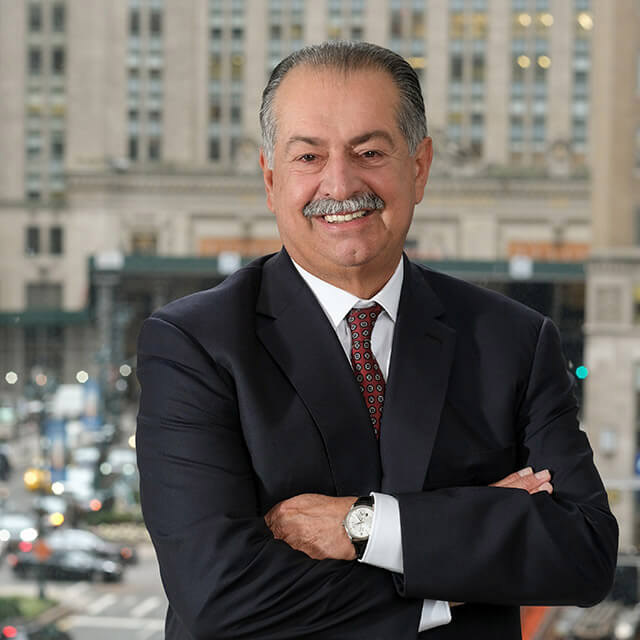
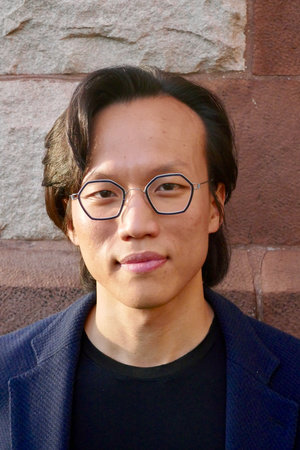
The 2023APCS theme ‘Shaping Cities for the Future’ will be the key discussion point among the keynote speakers on show, including Canadian award-winning author Charles Montgomery, Korean-Australian two-time world champion debater and former Harvard debate team coach, Bo Seo, and president of the Organising Committee for Brisbane 2032 Olympic and Paralympic Games, Andrew Liveris AO. 

Charles Montgomery, author of acclaimed book, Happy City, will share invaluable insights on creating happier, healthier, and more inclusive cities.

World champion debater, Bo Seo, will draw on his experience in debating to discuss the benefits of constructive arguments and disagreements, and highlight how important it is for leaders to engage in productive disagreement.

Brisbane 2032 Organising Committee president, Andrew Liveris, will dive further into his political background, having advised three US Presidents. He also served as co-chair of President Barack Obama’s Advanced Manufacturing Partnership. He will further explore the incredible benefits of the 2032 Olympic and Paralympic Games on Brisbane and South East Queensland.

Connecting local business to the world

The event will also see a number of business networking opportunities across industry, product exhibitions and an exclusive young professional’s leadership program conducted through Griffith University.

Cr Schrinner said the event would be the crown jewel in Brisbane’s business events calendar.

“This fantastic opportunity to network in person with business leaders from all over the world only comes around every two years and is not to be missed,” Cr Schrinner said. 

“I invite Brisbane’s business community to get involved and see how you can expand your operations across the Asia Pacific market and beyond.”

The 2023APCS is sponsored by leading organisations, including presenting sponsor Visy; principal partners Airbnb, St Baker Energy Innovation Fund and Arup; major partners Milken Institute, KPMG and Griffith University; and partners EarthCheck, Mastercard and Volvo.

Sponsors include GHD, HCL Tech and Shayher Group; and supporters are Acciona, APAC Network, ARIA, Articulous, Brisbane Airport Corporation, Brisbane Economic Development Agency, Council of Mayors South East Queensland, Gadens, Neuron, Populous, Queensland Futures Institute, Queensland University of Technology, Regional Development Australia, Smart Mortage Corp, Solomons Group, Study Queensland, Smart Cities Council and UN Women Australia.

Registrations are now open at www.apcsummit.org

For more information about the 2023APCS, contact Brisbane City Council at brisbane.qld.gov.au or call 3403 8888.

ends

Tammy Kassiou’s Philotimo Group works to uplift Timor-Leste

By Leon Gettler, Talking Business >>

WHAT ARE the challenges for a business overseeing the development of Timor-Leste, having one of the youngest populations in the Asia-Pacific region, with a median age of 17.4 years?

Timor-Leste is ranked as a ‘least developed’ country and its economy is heavily dependent on gas and oil extractions. About 74 percent of the population is below 35 years of age.

Tammy Kassiou is the founder and chair of Philotimo, an international business operating in Timor-Leste which runs International Mobility Services (IMS), a job placement organisation and an Industry Safety Assessment and Training (ISAT) a training organisation. Ms Kassious said it was a major challenge for her company, which was established in 2010. 

Ms Kassiou said the road to prosperity for Timor-Leste was through creating hundreds of thousands of jobs and partnerships with major companies like Santos.

For the last decade, non-government organisations had been overseeing the development of Timor-Leste. It was now moving into a commercial phase for business.

Ms Kassiou said the best way to do this was to create jobs and people had to be skilled to international standards to develop quality infrastructure and quality living.

Challenging times for Timor-Leste

Ms Kassiou said the challenges of running a business in a developing country were “certainly not for the faint-hearted” and required a long-term vision.

“Not over three years, you need to look ahead perhaps 50 years,” Ms Kassiou told Talking Business. “It’s to put the foundations in place to have a look at the return over a long term period instead of very short.”

She gave an example of a typical day for her in Timor-Leste would be where she is in her high heels and suit and having a meeting with a government Minister at 9am and then at 11am she is “overseeing the distribution of rice to some of the villages”.

“You have to be quite flexible and very open minded to doing business a different way,” she said.

Ms Kassiou said the challenges were mainly about building a skilled workforce for the companies.

“The skill level is a challenge,” she said.

Training the trainers a priority

As a result, IMS has taken industry people and put them through a training and development program for them to become trainer assessors, qualified under Australian standards.

“Our trainer assessors are helping us ensure that we can build our own workforce with the right skills to be able to compete internationally but also to be able to impart that knowledge and build a sustainable workforce pool across Timor-Leste,” Ms Kassiou said.

About $500 million of goods are now imported into Timor but only 2 percent comes from Australia. The rest comes from China and Indonesia.

“That has been the opportunity where we have grown our workforce to 100 staff and over the next 12 months, we forecast that may double,” Ms Kassiou said.

“The benefits are about us creating jobs and giving skills for that long-term prosperity.”

Ms Kassiou said the workforce for Timor-Leste was diverse and are aged between 18 and 45.

Much of the more skilled labour into Timor-Leste had been imported in the past.

“We see that as a cornerstone to have local people building the infrastructure to international standards and creating jobs,” Ms Kassiou said.

www.philotimo.world

www.leongettler.com


Hear the complete interview and catch up with other topical business news on Leon Gettler’s Talking Business podcast, released every Friday at www.acast.com/talkingbusiness.

https://play.acast.com/s/talkingbusiness/talking-business13-interview-with-tammy-kassiou-from-philoti


ends